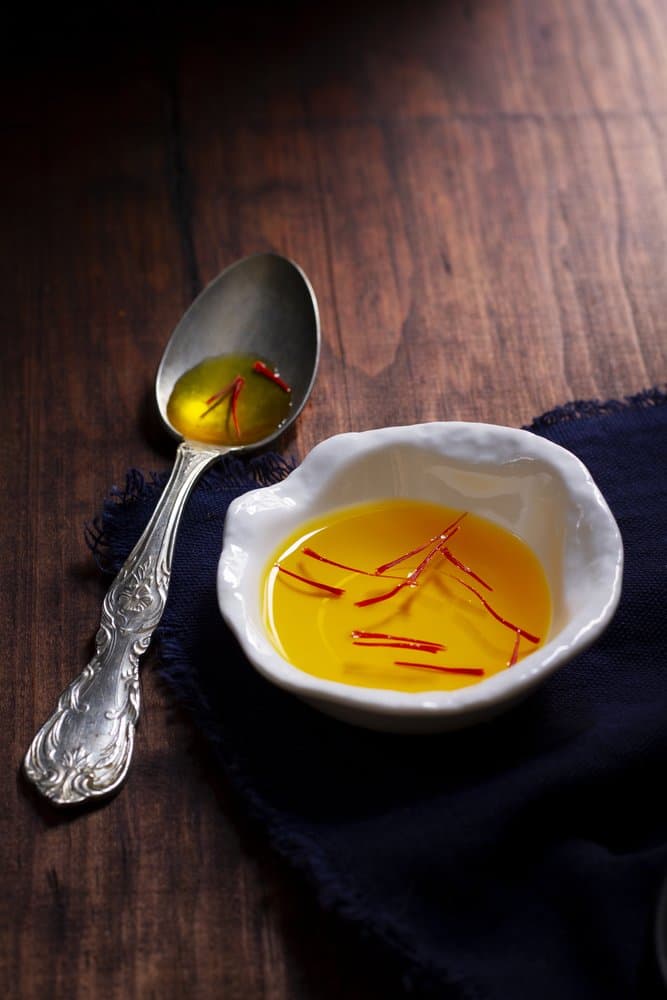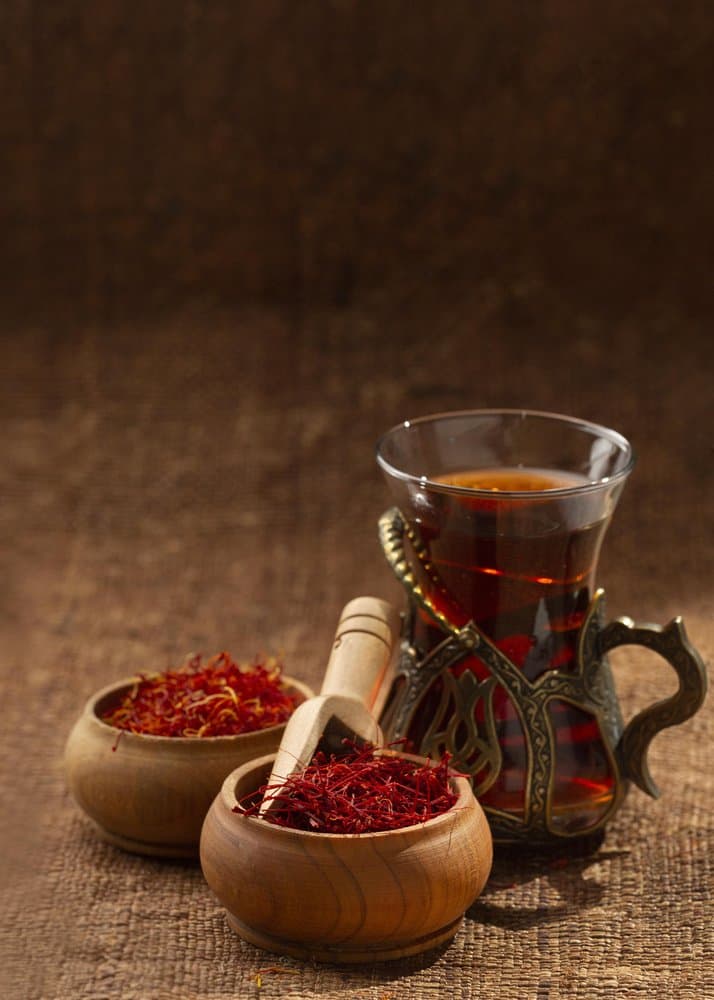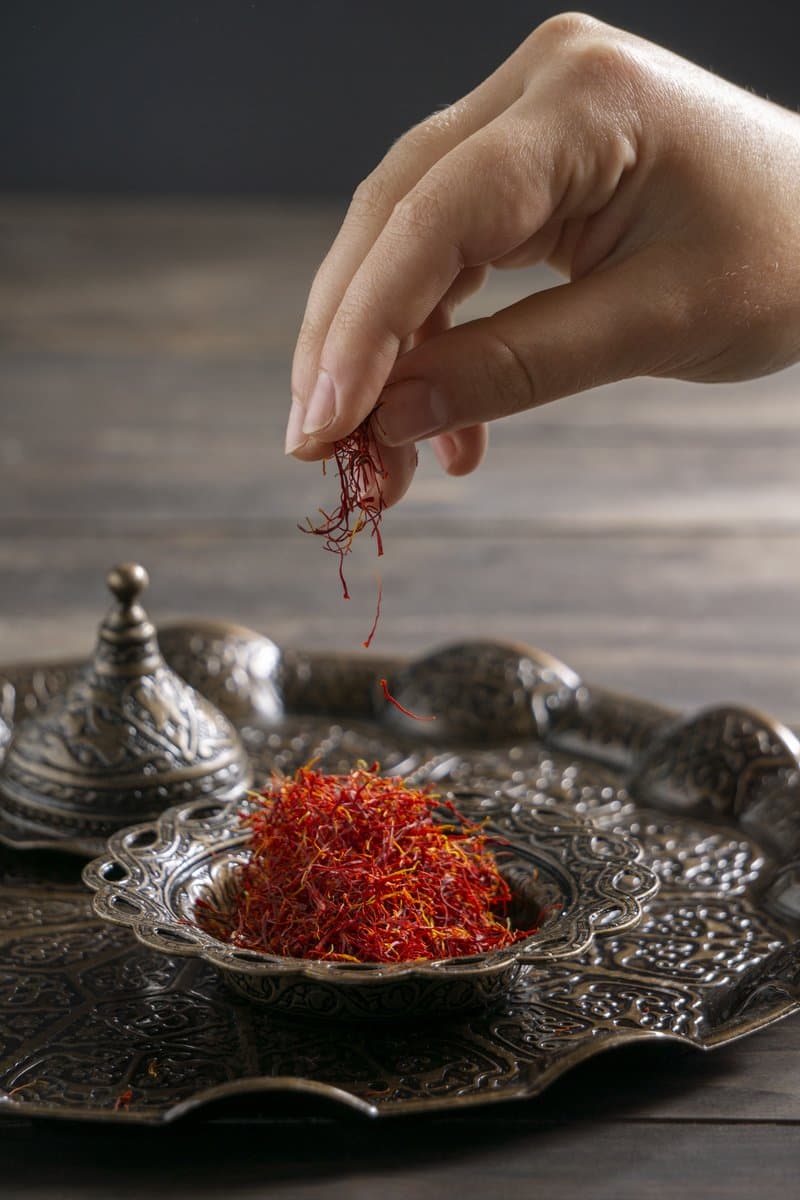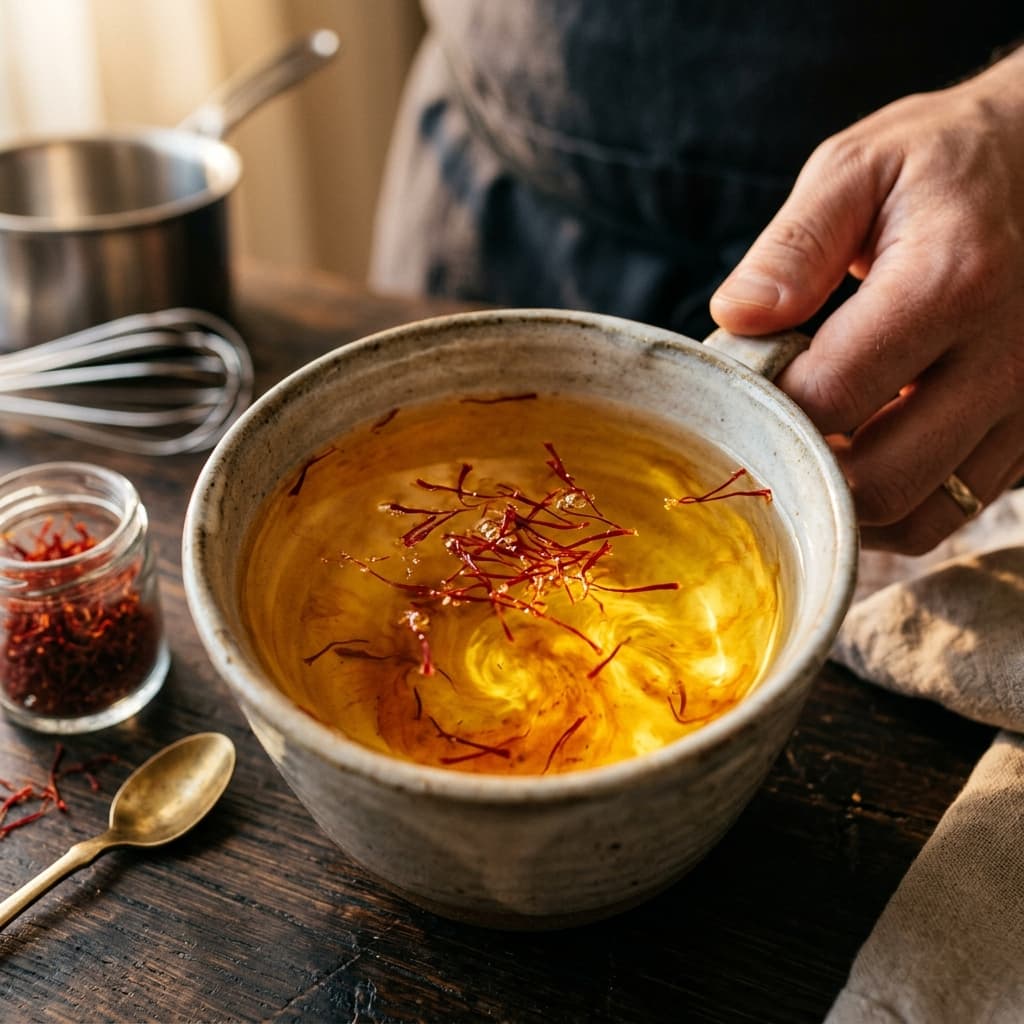
Blooming saffron is the single most important step in cooking with this precious spice. Skip it, and you waste 60-70% of saffron’s flavor and color. Do it right, and a few crimson threads transform an entire dish into something extraordinary.
At the Bakhchane Cooperative in Taliouine, Morocco, we’ve worked with chefs across three continents. The single most common question they ask is: how do I get the most out of my saffron? The answer is always the same. Bloom it properly.
What Does It Mean to Bloom Saffron?
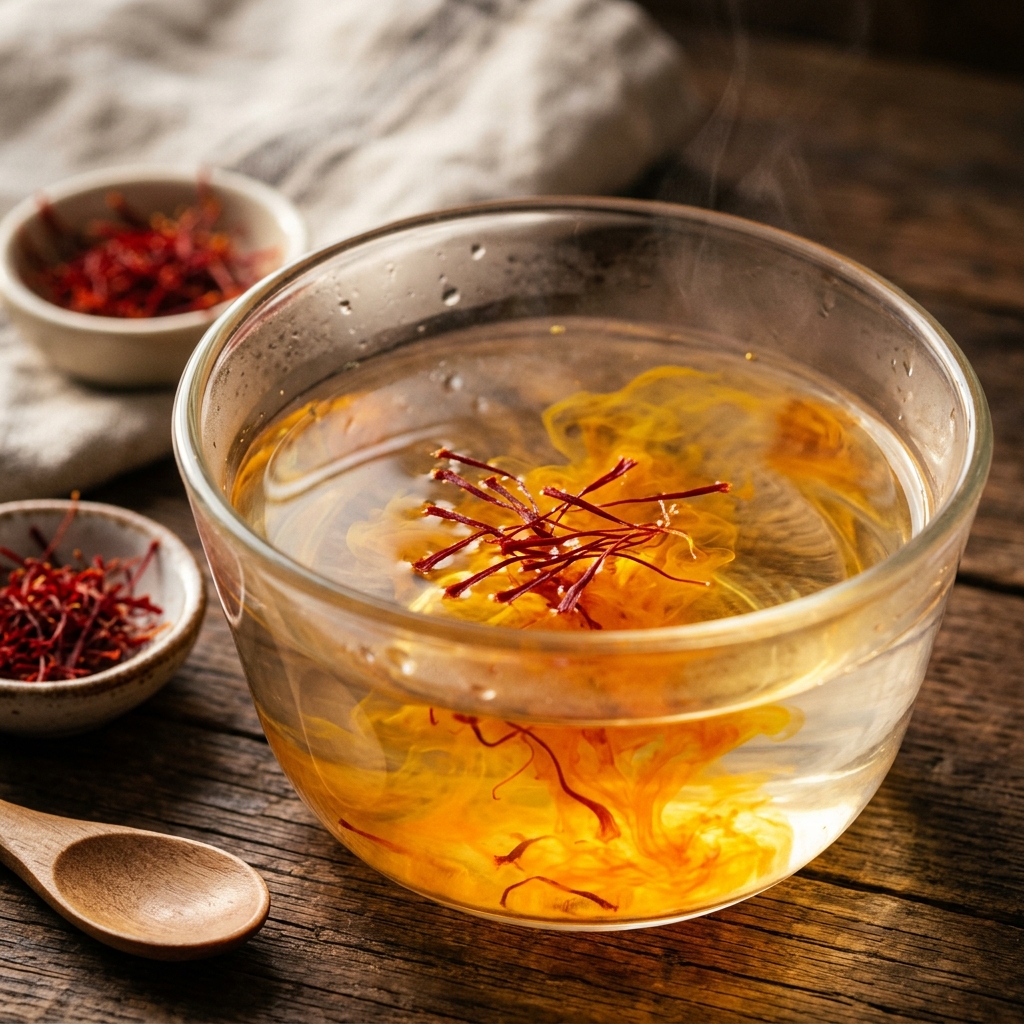
Blooming saffron means soaking the dried threads in a warm liquid before adding them to your dish. This rehydration process releases three water-soluble compounds that give saffron its character:
- Crocin — the carotenoid responsible for the deep golden color
- Picrocrocin — the bitter compound that creates the distinctive earthy taste
- Safranal — the volatile oil that produces saffron’s hay-honey aroma
Adding dry threads directly to a hot dish locks these compounds inside. The threads stay dry, give you barely any color, and you get a fraction of the flavor you paid for.
Method 1: The Warm Water Bloom (Most Versatile)
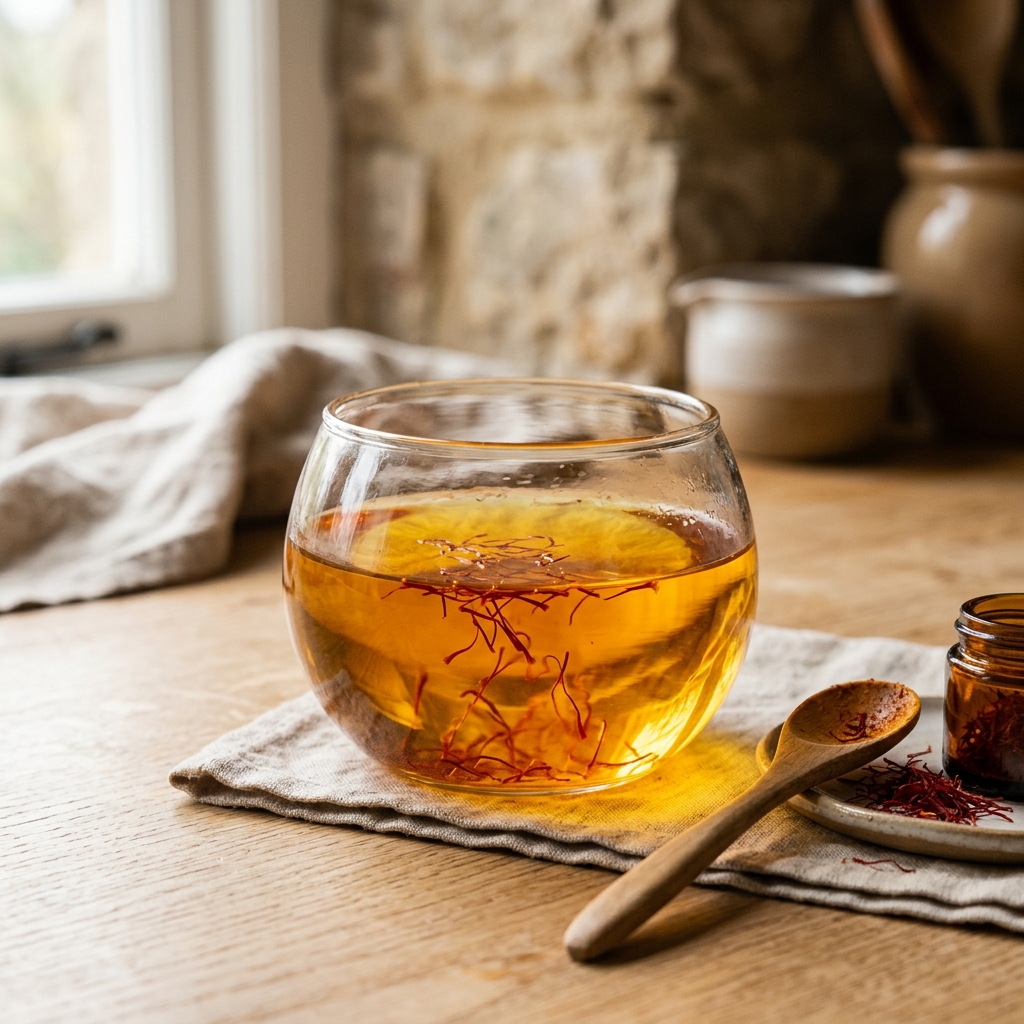
This is the technique we recommend for 90% of recipes — risottos, paellas, tagines, broths, sauces, and rice dishes.
Steps
- Measure your saffron threads (see dosage chart below)
- Heat 2-3 tablespoons of water until just warm to the touch — not boiling. Boiling water destroys safranal.
- Pour the warm water over the threads in a small bowl
- Wait 15-30 minutes. The water will turn deep amber-gold
- Add both the liquid AND the threads to your dish
You can also bloom saffron in warm broth, milk, or wine — anything water-based works. Avoid pure oil; the compounds we want are water-soluble, not fat-soluble.
Method 2: The Mortar & Pestle Method (Maximum Extraction)
Used in traditional Moroccan and Iranian kitchens. Yields 20-30% more color than warm-water blooming.
- Place dry saffron threads in a small mortar with a pinch of salt or sugar (the abrasion helps)
- Grind for 30 seconds until you have a fine red powder
- Add 2 tablespoons of warm water
- Stir to dissolve, then let it sit for 10 minutes
- Add to your dish along with the soaking liquid
This is the gold standard for saffron rice, lassi, and milk-based desserts where you want intense color in a small volume of liquid.
Method 3: The Toasted Bloom (Spanish Paella Tradition)
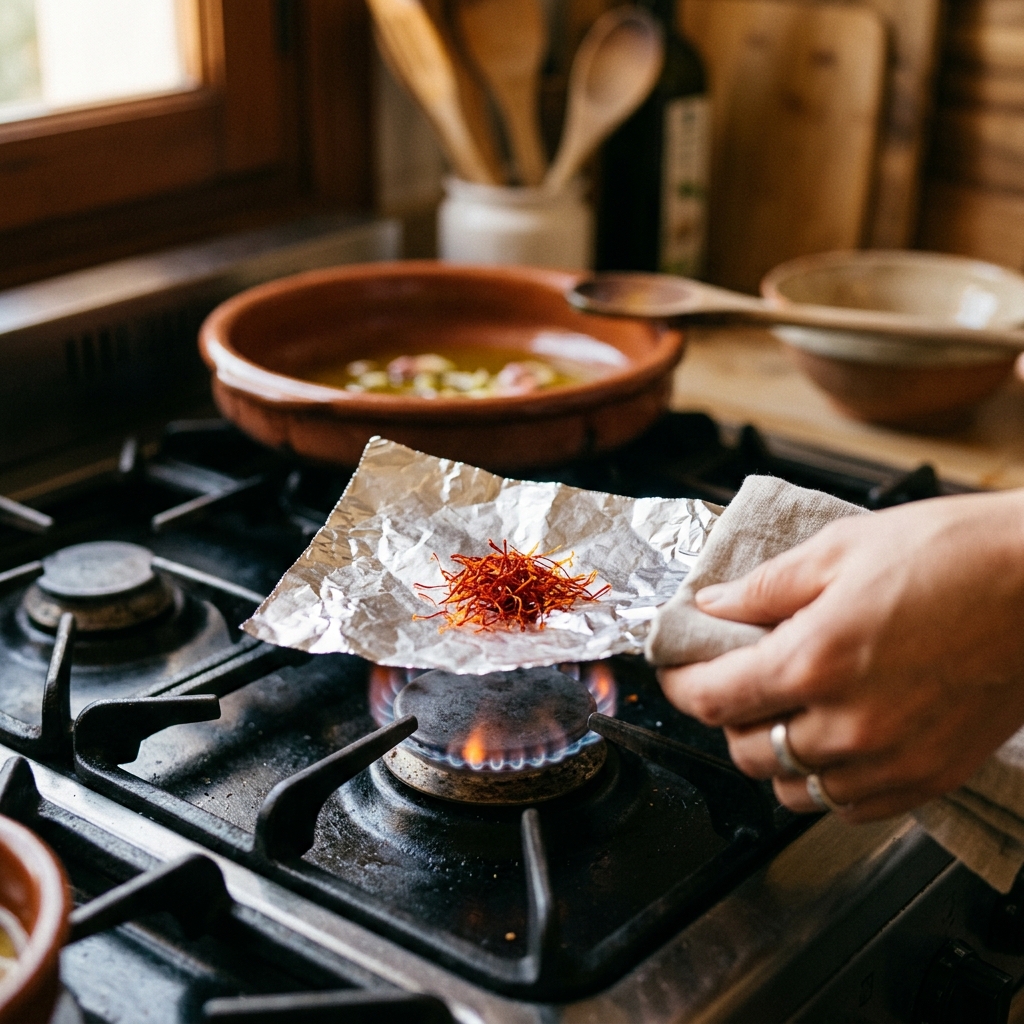
Spanish paella masters in Valencia gently toast saffron before blooming. This caramelizes the surface compounds and adds a smoky depth.
- Wrap dry saffron threads in a small piece of aluminum foil or parchment
- Toast over very low heat (or in a 150°C / 300°F oven) for 60-90 seconds
- Crumble between your fingers — the threads should snap, not bend
- Bloom in 2-3 tablespoons of warm broth for 15 minutes
- Add to the paella in the final 10 minutes of cooking
Warning: Burnt saffron tastes like ash. If your threads turn brown, throw them out and start over.
Method 4: The Cold Infusion (For Desserts & Cocktails)
For ice cream, panna cotta, sorbet, and saffron cocktails, you want the color and aroma without the heat-driven bitterness extraction.
- Soak threads in 2-3 tablespoons of cold milk, cream, or vodka
- Cover and refrigerate for 4-12 hours (overnight is best)
- Strain or use as-is
Cold infusion is slower but extracts a cleaner, more floral profile — exactly what delicate desserts need.
Saffron Dosage Chart by Dish
| Dish | Servings | Saffron Threads |
|---|---|---|
| Risotto Milanese | 4 | 1/2 teaspoon (~30 threads) |
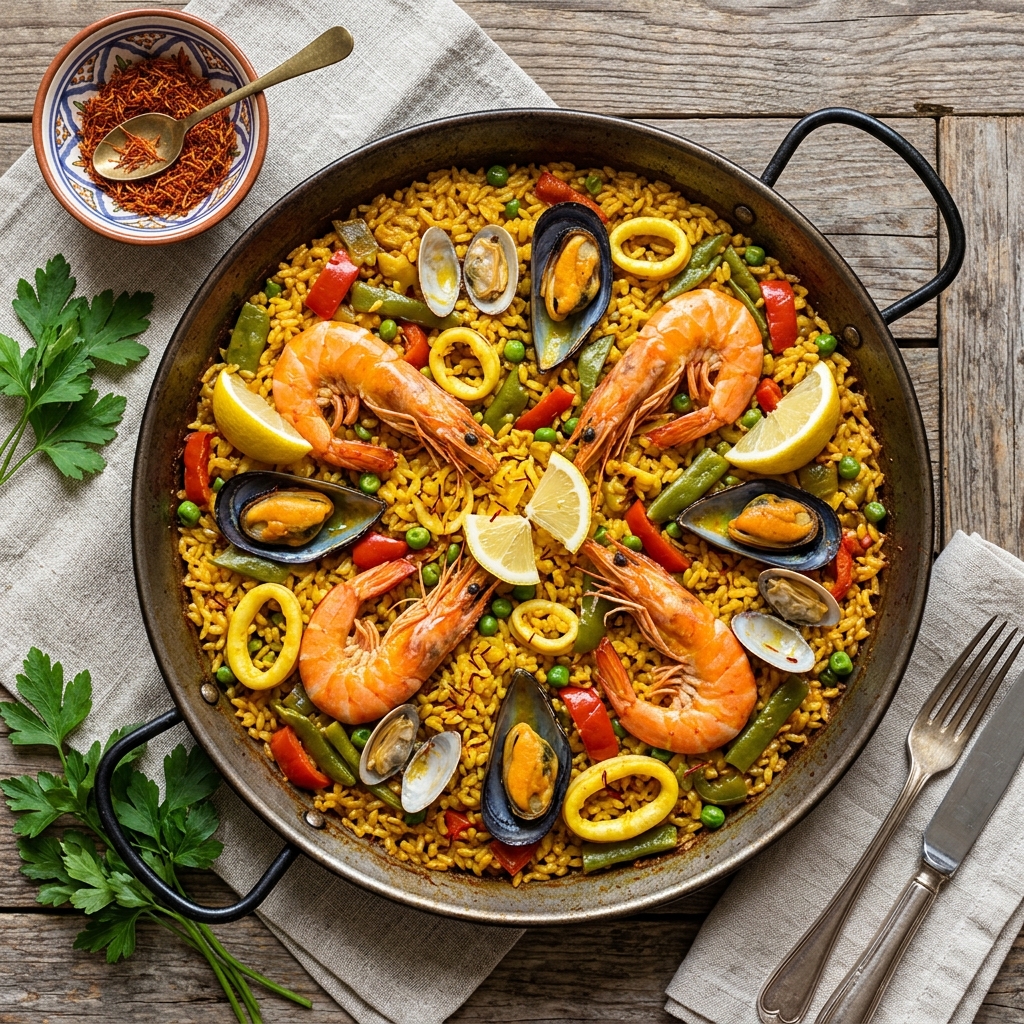
| Paella Valenciana | 6 | 1 teaspoon (~60 threads) |
| Moroccan Tagine | 4 | 1/4 teaspoon (~15 threads) |
| Saffron Rice (basmati) | 4 | 1/4 teaspoon (~15 threads) |
| Bouillabaisse | 6 | 1 teaspoon (~60 threads) |
| Saffron Ice Cream | 1 quart | 1/2 teaspoon (~30 threads) |
| Persian Saffron Tea | 1 cup | 3-5 threads |
One gram of premium Moroccan saffron threads contains roughly 450 threads — enough for 7-8 family meals.
5 Common Blooming Mistakes
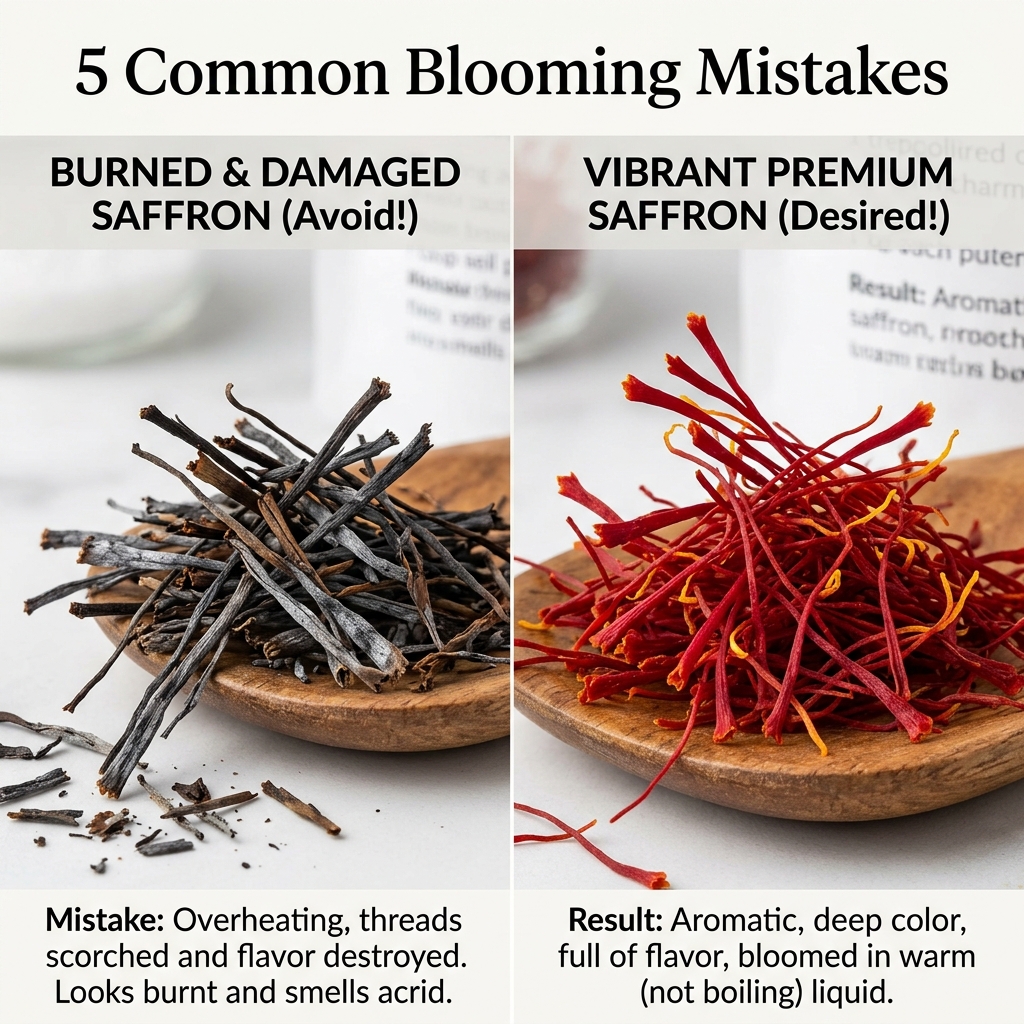
- Using boiling water. Destroys safranal and produces a flat, bitter result. Always use warm — not hot — water.
- Not waiting long enough. Saffron needs at least 15 minutes to release its compounds. 30 minutes is better.
- Discarding the soaking liquid. The liquid contains 80% of the flavor. Always add it to the dish.
- Using too much. More saffron isn’t better. Past the threshold, you taste medicinal bitterness instead of floral honey.
- Buying powdered saffron. Powder is almost always adulterated with turmeric or paprika. Only buy whole threads from a verified source.
FAQ: Blooming Saffron
Can I bloom saffron the night before?
Yes. Cover the bowl and refrigerate. The bloom is actually more complete after 12 hours. Bring to room temperature before using.
How long does bloomed saffron keep?
Up to 48 hours refrigerated. Past that, the volatile aromatics fade and you lose the bouquet.
Is it OK to bloom saffron in milk for risotto?
Yes — milk is excellent for blooming. The proteins in milk also bind to saffron compounds and carry them through the dish. Many Lombardy chefs swear by it for risotto Milanese.
Why are my bloomed threads still red instead of dissolving?
That’s perfectly normal — and a good sign. Premium saffron threads release color but don’t fully dissolve. If your saffron dissolves completely or stains your fingers immediately, it’s likely adulterated. Read our guide on how to identify real saffron.
The Quality of Your Saffron Determines the Method’s Success
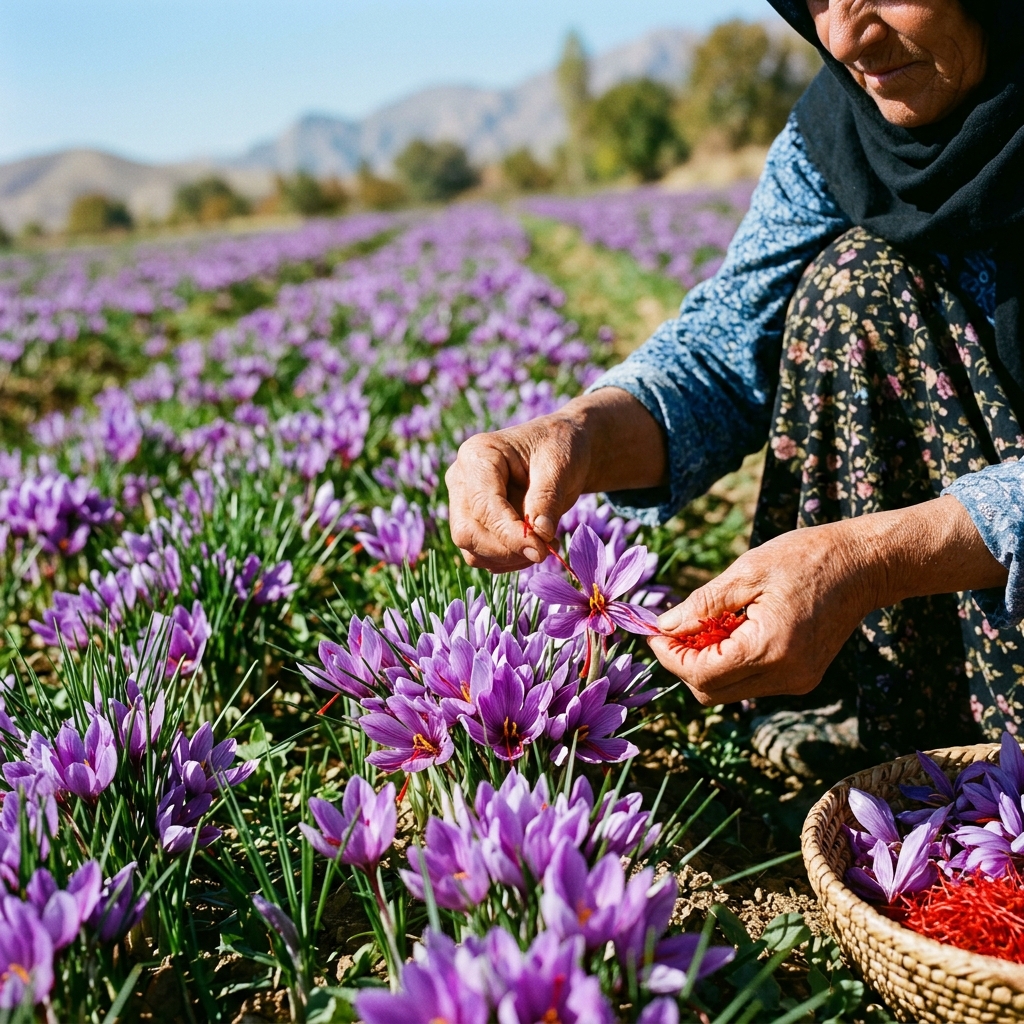
Even perfect technique can’t rescue inferior saffron. We harvest Taliouine saffron entirely by hand, dry it within hours of picking, and grade it to ISO 3632 Category I — the highest classification for color (crocin), flavor (picrocrocin), and aroma (safranal).
Try our premium Moroccan saffron — start with a 1g vial. You’ll immediately taste why blooming matters.