Saffron has been used as medicine for over 3,500 years. What ancient Persian, Egyptian, and Moroccan healers discovered through trial and error, modern clinical research is now confirming through controlled trials. Crocin, picrocrocin, and safranal — the three active compounds in Crocus Sativus stigmas — show measurable effects on mood, cognition, vision, metabolism, and more.
This guide summarizes what the research actually shows, where the evidence is strong, where it’s preliminary, and how to use saffron safely. It’s based on peer-reviewed clinical trials published through 2025.
Disclaimer: This article is educational. It is not medical advice. Consult your doctor before starting any supplement regimen, especially if you take prescription medications.
1. Depression & Mood Disorders (Strong Evidence)
Saffron has the strongest research base for treating mild-to-moderate depression. Multiple meta-analyses published in 2018-2024 found that saffron extract (30 mg/day) is approximately as effective as fluoxetine (Prozac) for adult depression, with significantly fewer side effects.
The mechanism appears to involve serotonin reuptake inhibition similar to SSRIs, plus modulation of dopamine and norepinephrine. Crocin in particular crosses the blood-brain barrier.
Typical study dose: 15-30 mg saffron extract twice daily, equivalent to roughly 100-200 mg of saffron threads/day.
2. Anxiety Reduction (Moderate Evidence)
Several smaller trials show saffron reduces anxiety scores compared to placebo, with effect sizes comparable to low-dose anxiolytics. The effect appears within 4-8 weeks of daily supplementation.
One 2023 randomized trial of 80 adults with generalized anxiety found 30 mg/day reduced Hamilton Anxiety scores by 39% vs 12% in placebo group over 8 weeks.
3. PMS & Menstrual Symptoms (Moderate Evidence)
Saffron has a long history in traditional medicine for women’s health. Modern trials confirm a measurable benefit. A 2008 Iranian study (often cited) showed 30 mg/day reduced PMS symptoms in 76% of women vs 8% in placebo. Replication studies in 2019 and 2022 confirmed similar effects on mood symptoms, cramping, and irritability.
4. Eye Health & Macular Degeneration (Emerging Evidence)
Crocin and crocetin — the carotenoids responsible for saffron’s color — show neuroprotective effects on retinal cells. Several Italian and Australian trials have found 20-30 mg/day improves visual acuity and reduces progression in early-stage age-related macular degeneration (AMD).
The effect appears within 3 months and is maintained with continued use. This is one of the most exciting research directions for saffron currently.
5. Blood Sugar Regulation (Emerging Evidence)
Several trials in pre-diabetic and Type 2 diabetic patients show modest improvements in fasting glucose and HbA1c with 100-200 mg/day saffron threads or equivalent extract. The mechanism may involve improved insulin sensitivity and antioxidant protection of pancreatic beta cells.
Not a replacement for diabetes medication, but a meaningful adjunct based on current evidence.
6. Cognitive Function in Alzheimer’s (Preliminary Evidence)
A small but well-designed Iranian trial compared saffron (30 mg/day) to donepezil (a standard Alzheimer’s drug) over 22 weeks. Both showed similar cognitive improvements with fewer side effects in the saffron group. Larger trials are underway.
7. Weight Management & Appetite (Moderate Evidence)
Multiple trials show saffron reduces snacking frequency and emotional eating. The mechanism appears to be serotonin-mediated satiety, similar to mood effects. Typical results: 1-2 kg additional weight loss vs placebo over 8 weeks combined with calorie restriction.
8. Skin Health (Anecdotal & Topical Studies)
Topical saffron preparations have a long history in Moroccan, Persian, and Indian cosmetics for brightening, anti-inflammatory, and anti-acne effects. Modern in vitro studies confirm crocin reduces inflammatory markers and inhibits melanin overproduction. Clinical trial evidence is still preliminary.
9. Antioxidant & Anti-Inflammatory Activity (Strong In Vitro Evidence)
Saffron is one of the most antioxidant-rich spices measured. ORAC values rival or exceed those of acai, cocoa, and turmeric. The carotenoids crocin and crocetin show specific protective effects on liver, kidney, and cardiovascular tissue in animal models.
Recommended Dosage
| Use | Saffron Threads (whole) | Frequency |
|---|---|---|
| Culinary (flavor) | 0.05-0.5 g per dish | Per recipe |
| Mood / mild depression | 100-200 mg | Daily, 6-8 weeks min |
| PMS support | 100 mg | 2 weeks before period |
| Eye health | 100-200 mg | Daily, 3+ months |
| General wellness | 50-100 mg (small pinch) | Daily in tea or food |
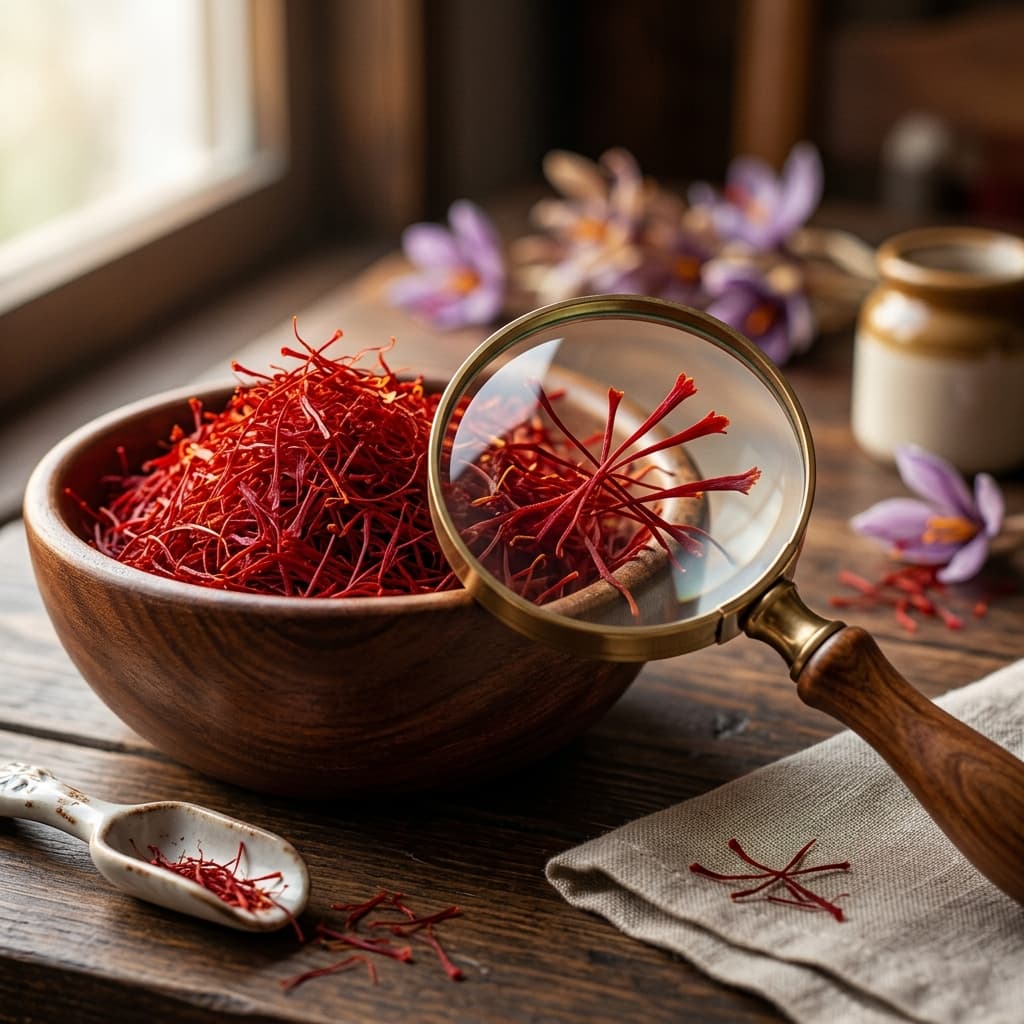
Reference: 1 gram of saffron threads ≈ 450 threads. 100 mg ≈ 45 threads ≈ 1/8 teaspoon.
Safety & Side Effects
Saffron is well-tolerated up to 1.5 g/day. Side effects at therapeutic doses (under 200 mg/day) are rare and typically mild — drowsiness, nausea, dry mouth, headache.
Important warnings:
- Pregnancy: Avoid medicinal doses. Saffron is uterotonic at high doses (>5 g) and can induce contractions. Culinary amounts are safe.
- Drug interactions: Possible interaction with SSRIs, MAOIs, blood thinners, and antihypertensives. Talk to your doctor.
- Allergies: Rare but possible, particularly in those with crocus or grass allergies.
- Toxic dose: 5 g/day is the LOAEL (lowest observed adverse effect level). 20 g+ is potentially fatal. Stay well below.
How to Take Saffron Daily
For health benefits, consistency matters more than dose. Practical methods:
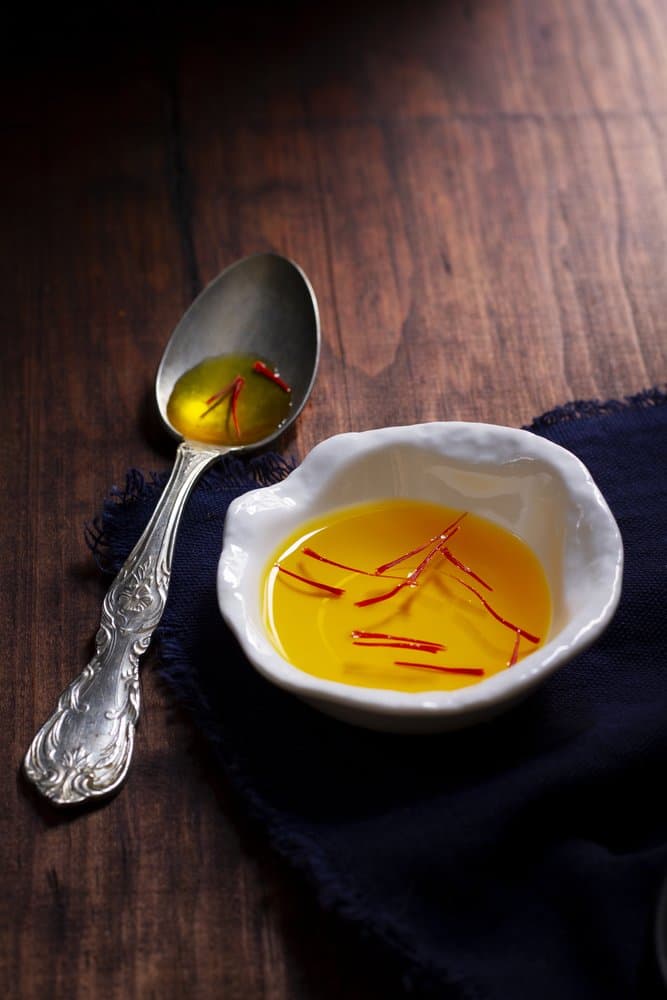
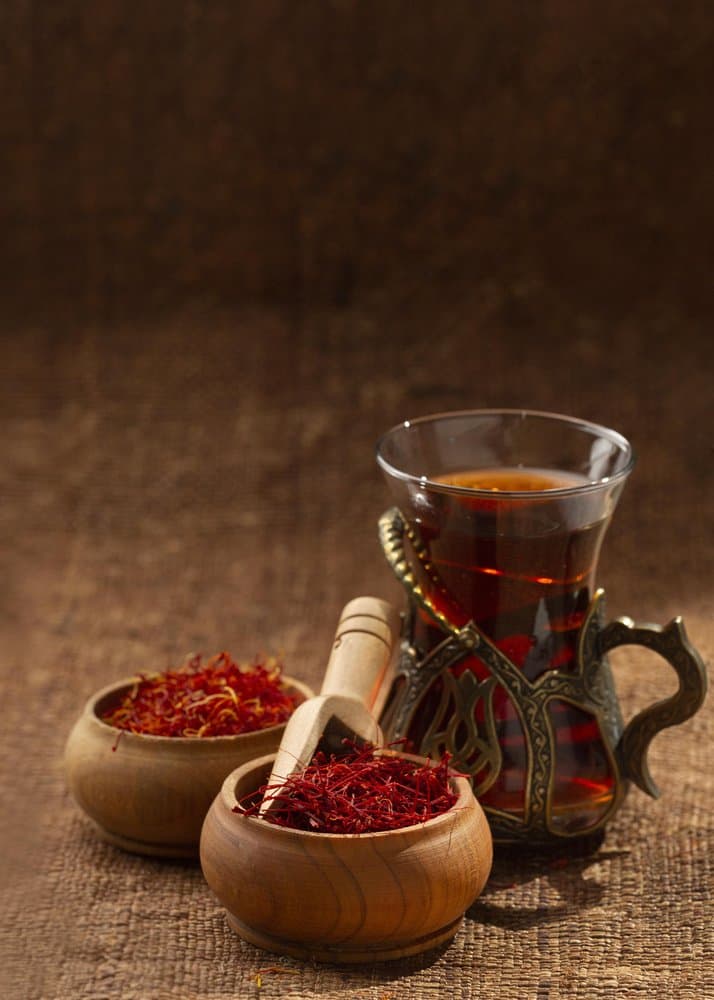
- Saffron tea: 5-10 threads in a cup of warm water, sweeten with honey. Drink once or twice daily. Try our Saffron Tea Collection.
- Saffron milk (golden milk): 5-7 threads bloomed in 1 cup warm milk with cardamom. Traditional evening drink.
- Capsule supplement: Standardized extracts (look for ≥0.3% safranal) at 30 mg twice daily.
- In food: Daily use in rice, soups, eggs, sauces. Lower clinical effect but cumulative.
FAQ: Saffron Health Benefits
How long does it take to feel saffron’s effects?
Mood-related effects appear within 2-4 weeks of consistent daily use. Eye and metabolic effects need 3+ months. Single-dose effects (relaxation, mild euphoria) can be felt within 30-60 minutes after a strong dose.
Does saffron interact with antidepressants?
Possibly. Saffron has serotonergic activity, so combining with SSRIs/MAOIs theoretically risks serotonin syndrome. Talk to your prescriber before combining.
Is saffron a stimulant?
No. It’s mildly relaxing and mood-elevating, not stimulating. It does not contain caffeine or other classical stimulants.
Can I take saffron and turmeric together?
Yes — they’re complementary. Both have strong antioxidant and anti-inflammatory profiles via different mechanisms. Many traditional Indian and Persian preparations combine them.
Choose Quality for Real Effects
Cheap, adulterated saffron contains far less crocin and safranal — the compounds responsible for the health effects above. Our ISO 3632 Category I Moroccan saffron is lab-tested for active compound concentration on every batch. Pure threads, AOP-certified Taliouine origin.