Saffron is the most adulterated spice on Earth. Industry studies estimate that 70-90% of saffron sold globally is either diluted, dyed, or completely fake. At $5,000-$15,000 per kilogram, the incentive to cheat is enormous.
Whether you’re buying a 1-gram vial or a 500-gram wholesale order, you need to verify what you’re getting. This guide gives you 7 tests — the same ones quality labs use — that you can run in your kitchen in under 10 minutes.
Why Saffron Gets Faked
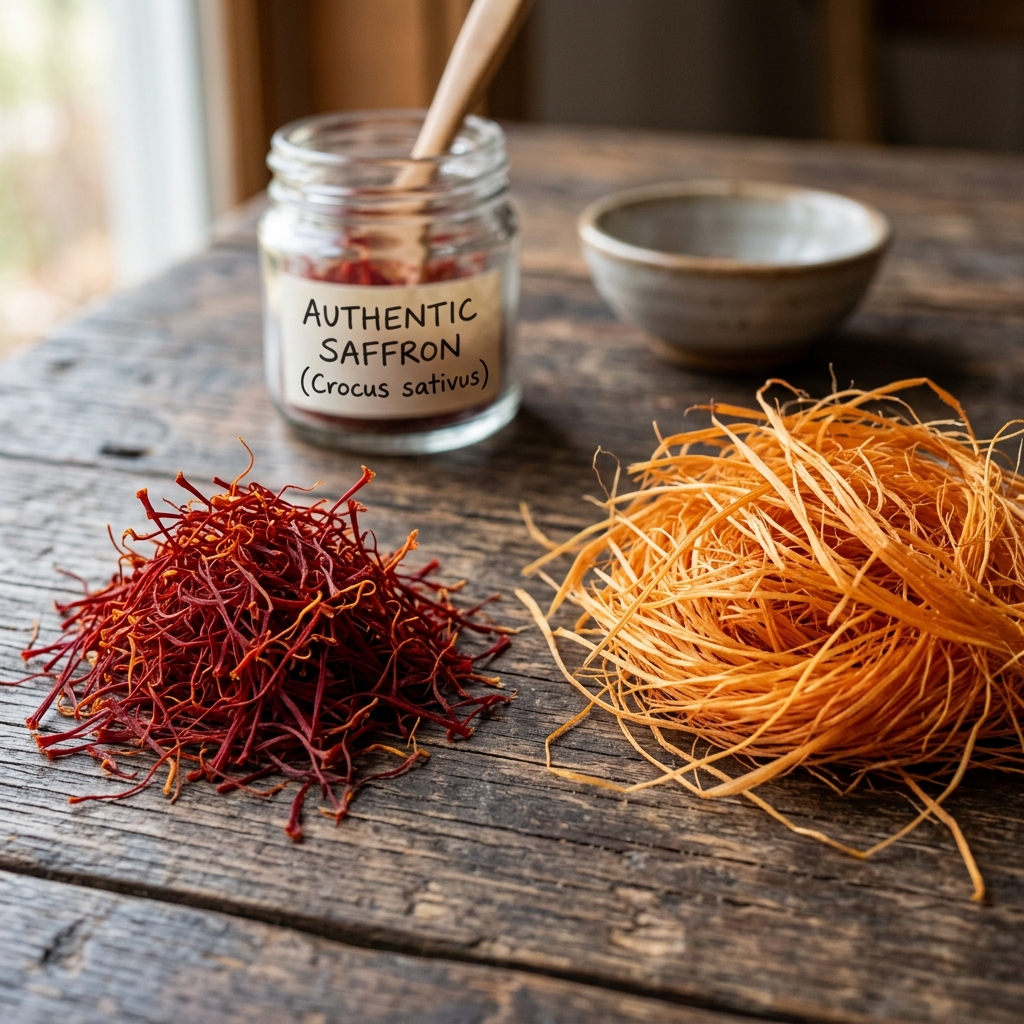
One pound of saffron requires roughly 75,000 hand-picked Crocus Sativus flowers. The economics are punishing for the producer and absurdly profitable for the counterfeiter. Common fakes include:
- Safflower dyed with red coloring (cheapest and most common substitute)
- Marigold petals stripped and dyed
- Beet fibers with artificial saffron-flavor compound added
- Real saffron stems mixed with the threads (still saffron, but flavorless filler)
- Real saffron dyed redder to look more premium than it is
Test 1: The Water Test (60 seconds)
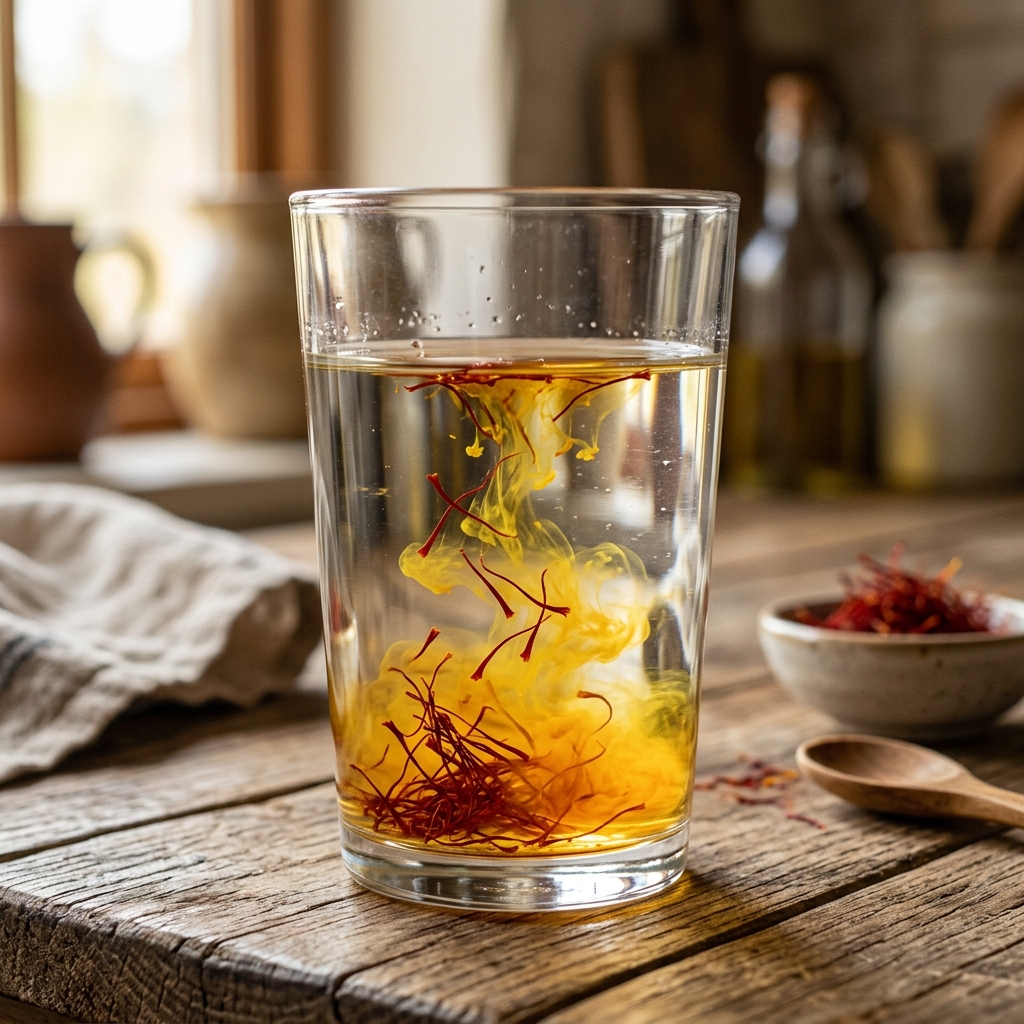
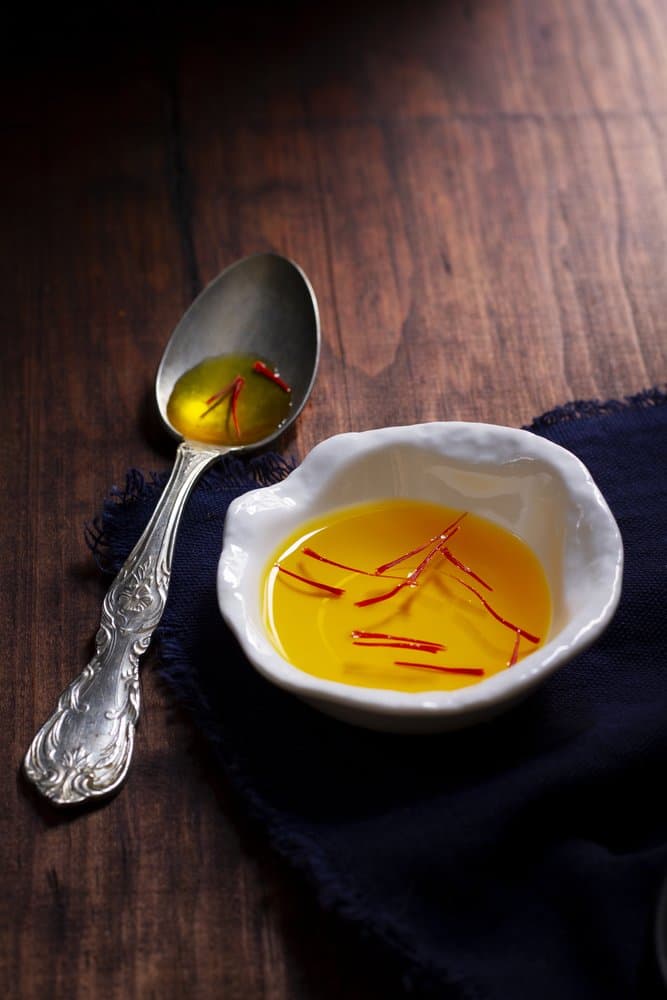
The single most reliable home test. Drop 4-5 threads into a glass of room-temperature water and wait.
- Real saffron: Releases color slowly. After 10-15 minutes, the water is golden-yellow. The threads themselves stay red — they don’t bleed white or fall apart.
- Fake saffron: Releases color instantly. Within seconds the water is bright red or orange. The threads turn pale or white as the dye washes out.
Real crocin takes time to leach out because it’s bound into the thread’s structure. Synthetic dyes dissolve immediately because they’re just coating the surface.
Test 2: The Smell Test
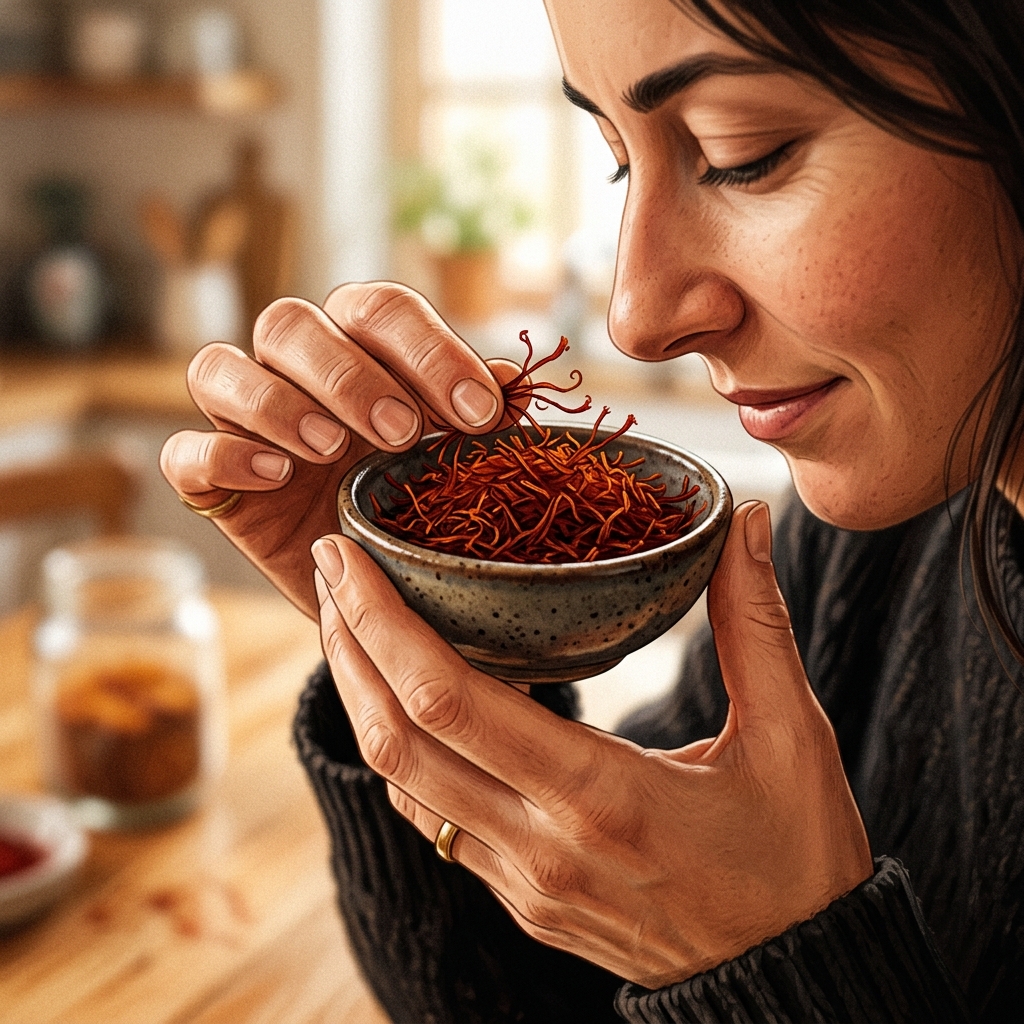
Real saffron has a complex aroma — equal parts sweet hay, dried honey, and a slight metallic-iodine note. It’s distinctive enough that once you’ve smelled real saffron, you’ll never confuse it.
- Real saffron: Floral, hay-like, honey-sweet. Persistent — you can still smell it on your fingers an hour after handling.
- Fake saffron: Smells like nothing, like grass, or chemical/sweet (artificial saffron flavoring is unmistakably fake to a trained nose).
Test 3: The Taste Test
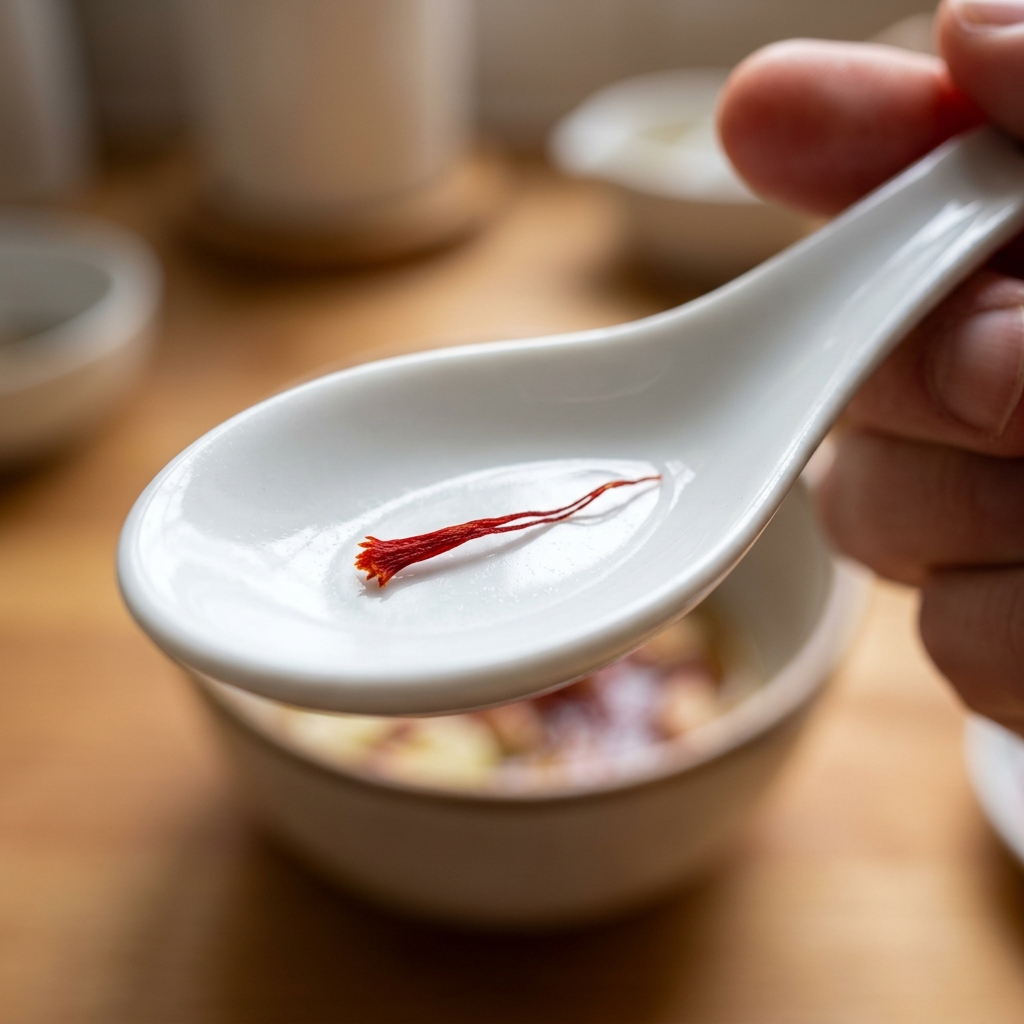
Place a single thread on your tongue. Wait 30 seconds.
- Real saffron: Initially flavorless, then a slow build of bitter-earthy taste with a metallic undertone. NOT sweet.
- Fake saffron: Either tastes sweet (sugar coating) or completely flavorless (it’s just dyed plant fiber).
If your “saffron” tastes sweet, you’ve been scammed.
Test 4: The Baking Soda Test
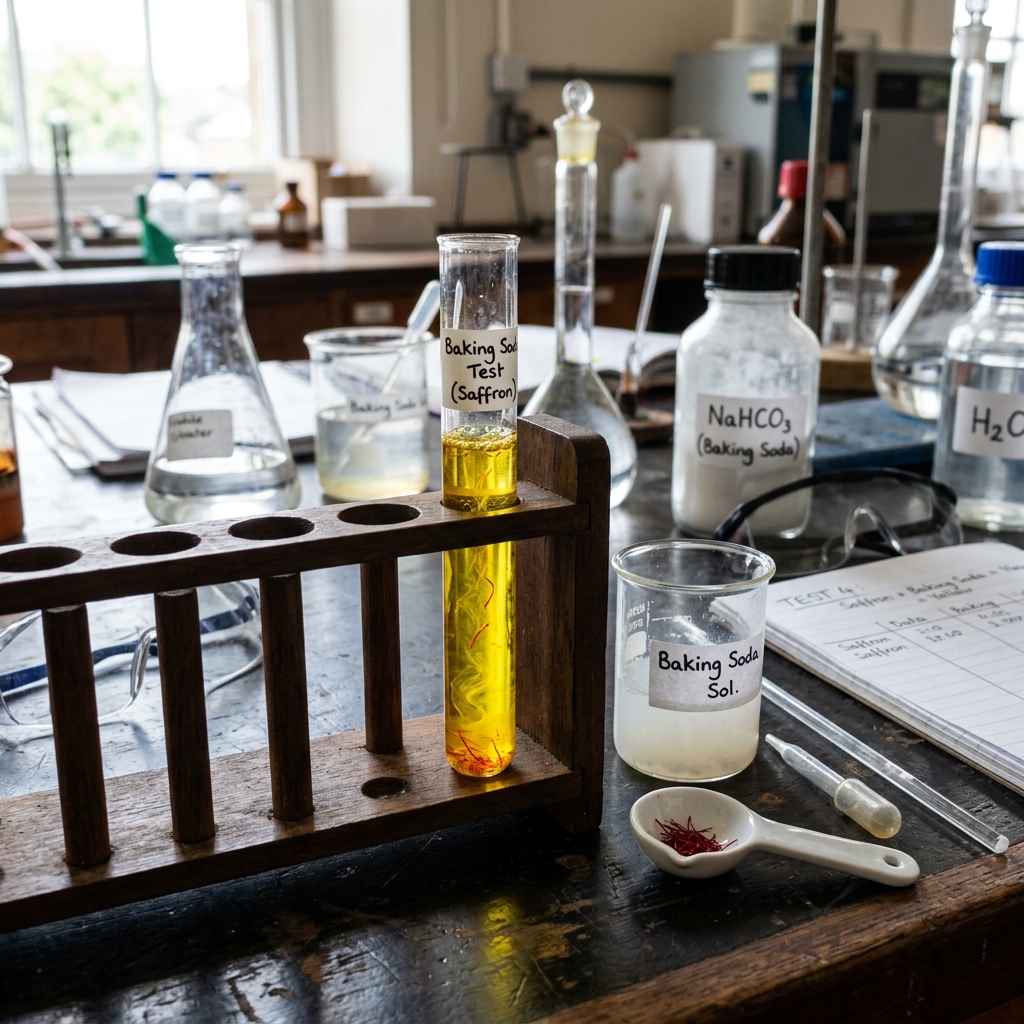
This one’s used by lab technicians. Mix a teaspoon of baking soda with a tablespoon of water. Drop in a pinch of saffron.
- Real saffron: Solution turns yellow.
- Fake (dyed) saffron: Solution turns red or stays red.
The reaction works because real crocin oxidizes to yellow under alkaline conditions, while artificial red dyes are stable.
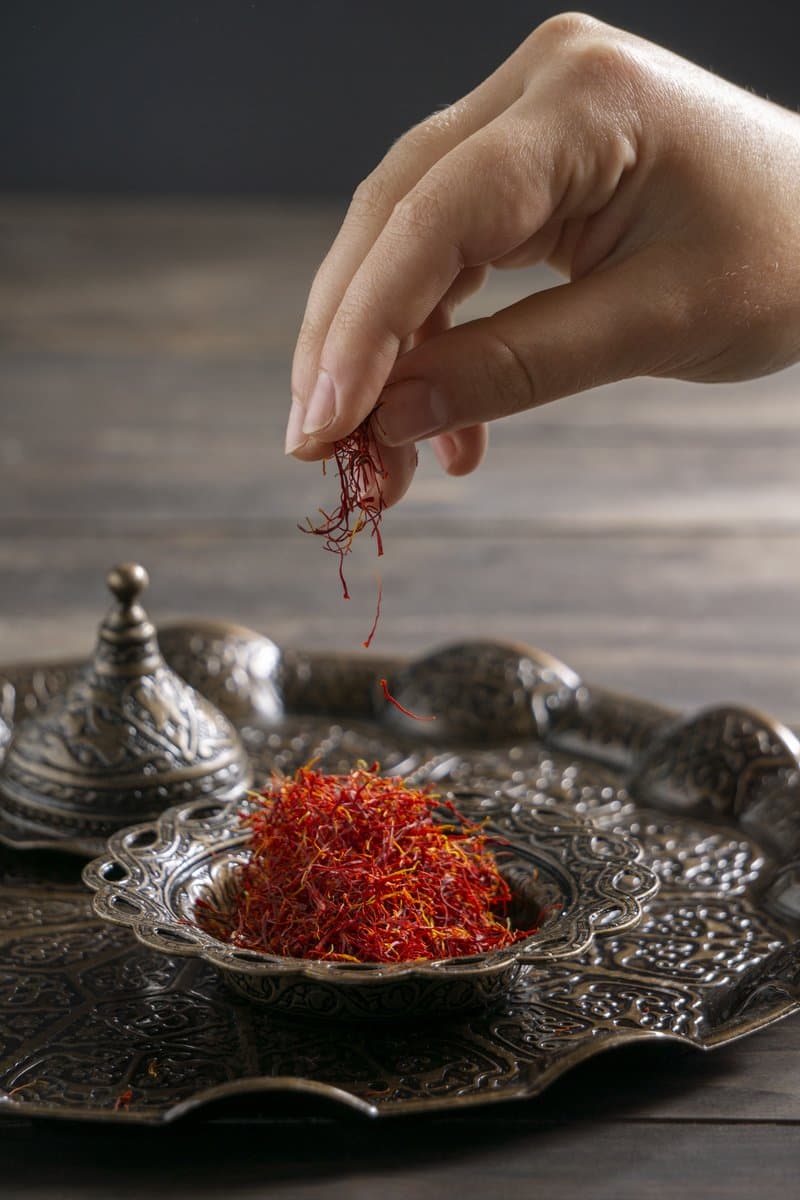
Test 5: The Visual Inspection
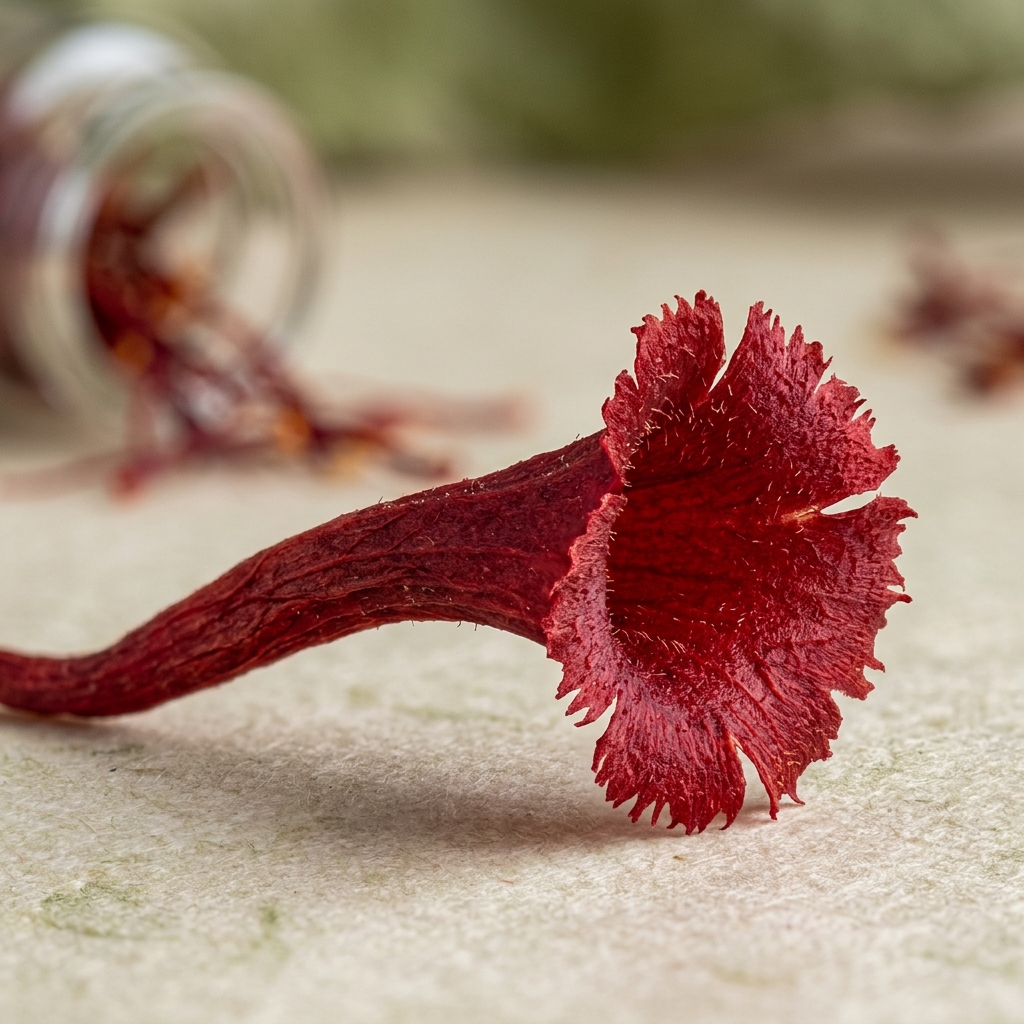
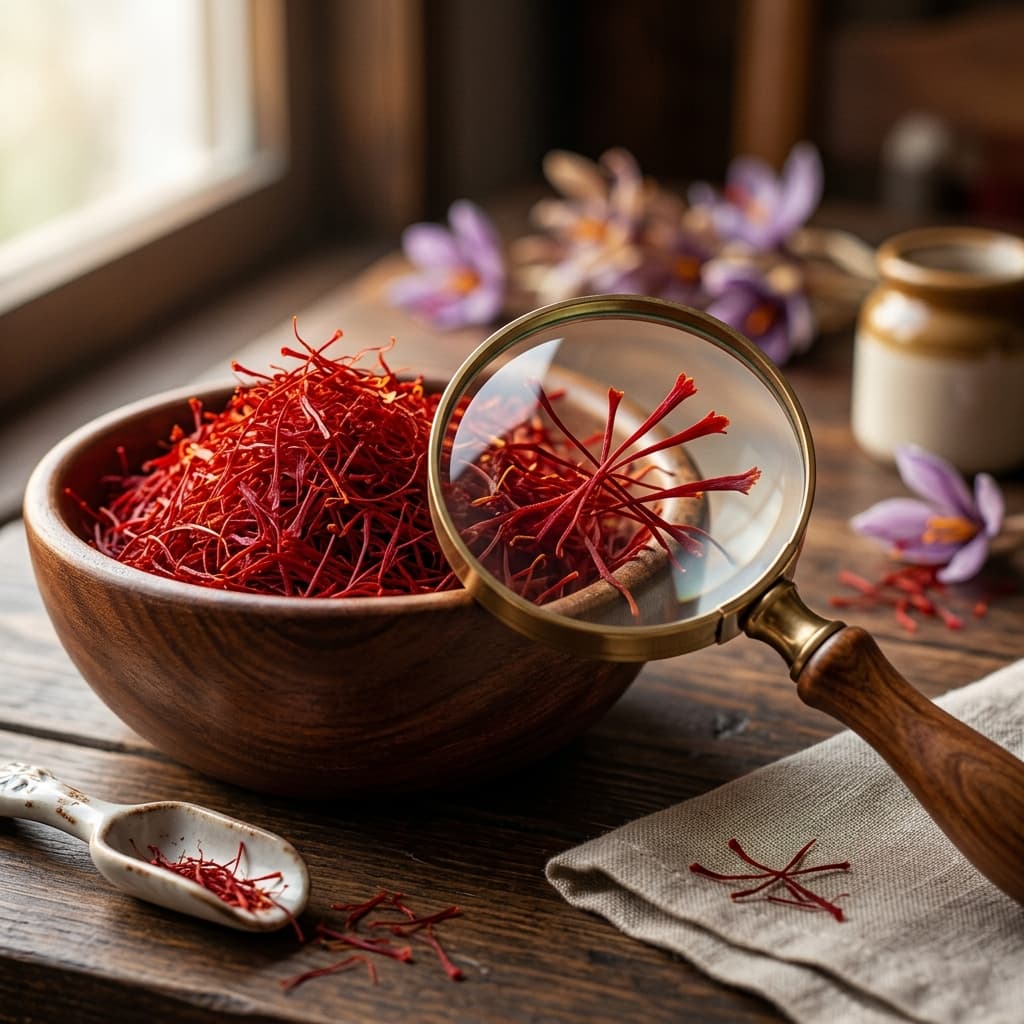
Real saffron threads have a specific shape that’s hard to fake.
- Trumpet shape: Each thread should flare slightly at one end (the “stigma” tip). One end is wider; the other is thinner.
- Length: 1-3 cm long, never longer.
- Color: Deep red to dark crimson, with a slight orange tip on the wider end (the style). NOT uniformly bright red — that’s a dye job.
- Texture: Slightly oily, slightly waxy, brittle when fully dry but flexible when squeezed.
If all your threads look identical, suspiciously uniform, and bright red — they’re probably safflower or dyed corn silk.
Test 6: The Rubbing Test
Place a few threads on a white paper towel. Rub gently with your finger.
- Real saffron: Leaves a yellow-orange smear (the natural carotenoid releasing).
- Fake saffron: Leaves a bright red or pink smear (the synthetic dye coming off).
Test 7: The Hot Water Bloom
Place 4-5 threads in a small bowl. Pour 2 tablespoons of hot (not boiling) water over them. Wait 20 minutes.
- Real saffron: Water gradually turns deep amber-gold. The threads remain red and visible. The aroma becomes intense.
- Fake saffron: Water either turns red instantly or stays clear; threads disintegrate, fade, or fall apart.
What to Look For When Buying
Beyond the home tests, certain certifications are very hard to fake:
- ISO 3632 Category I — Tests color (crocin), flavor (picrocrocin), and aroma (safranal). Category I is the highest. Ask for the certificate; ours is available on request.
- AOP / DOP / IGP — Origin protection (Appellation d’Origine Protégée). Requires saffron to be grown and processed in a specific region. Taliouine, Iran’s Khorasan, and Spain’s La Mancha all have AOP designations.
- Lab analysis report — Reputable producers can show batch-specific lab results.
All iD BAKHCHANE saffron is AOP-certified Taliouine origin and ISO 3632 Cat I tested.
Where Counterfeit Saffron Hides
Some red flags:
- Suspiciously low prices. If a seller offers “premium” saffron under $5/gram, it’s almost certainly fake. Genuine ISO 3632 Cat I costs $10-$20/gram retail.
- Powdered saffron. 95%+ of powdered saffron is cut with turmeric or paprika. Always buy whole threads.
- Tourist markets. Souks in Marrakech, Istanbul bazaars, Spanish markets — all common adulteration zones. Tourists are easy targets.
- “Saffron threads” with stems attached. The yellow/white parts are flavorless filler. Premium saffron is pure red stigmas only.
- Bulk listings on generic e-commerce. Without origin documentation, assume the worst.
FAQ
How can I tell if saffron is good quality before opening the package?
Good packaging includes: tamper-evident seal, ISO 3632 certification number, harvest date, country of origin (NOT just “imported”), and the producer’s name. Vacuum-sealed glass vials or foil pouches preserve quality. Avoid plastic bags or unbranded containers.
Is Iranian saffron better than Moroccan saffron?
Both are world-class when sourced from named regions. Iranian saffron from Khorasan and Moroccan saffron from Taliouine often score similar on ISO 3632 lab tests. Moroccan saffron tends to have a softer, more floral profile; Iranian saffron is often more intense and earthy. Personal preference — both are real saffron.
Can fake saffron be dangerous?
Yes. Common dyes used in fake saffron — including azo dyes and cancer-linked Sudan reds — are illegal as food coloring in the EU and US but still appear in counterfeit products. Real saffron from a verified source is the only safe option.
Why is my saffron crumbling?
Crumbling threads are over-dried or oxidized — usually meaning the saffron is old or was poorly stored. Fresh, properly cured saffron is brittle but doesn’t disintegrate. Store yours in an airtight container away from light and heat.
Buy from a Verified Producer
The simplest way to avoid fake saffron is to buy directly from the source. Our cooperative harvests every gram by hand in Taliouine, Morocco, and ships worldwide with full ISO 3632 documentation and traceable batch records.
Browse our collection — every order arrives with the certificate of origin and lab analysis matched to your specific batch.