Saffron is cultivated in many countries — from Iran and India to Spain and Greece — yet connoisseurs, chefs, and laboratory analysts consistently single out one origin above all others: Taliouine, Morocco. At Bakhchane Cooperative, we have spent decades nurturing this exceptional spice and sharing it with the world. In this article, we explain precisely why Taliouine saffron commands the highest regard, and how you can make sure you are buying the genuine article.
The Terroir of Taliouine
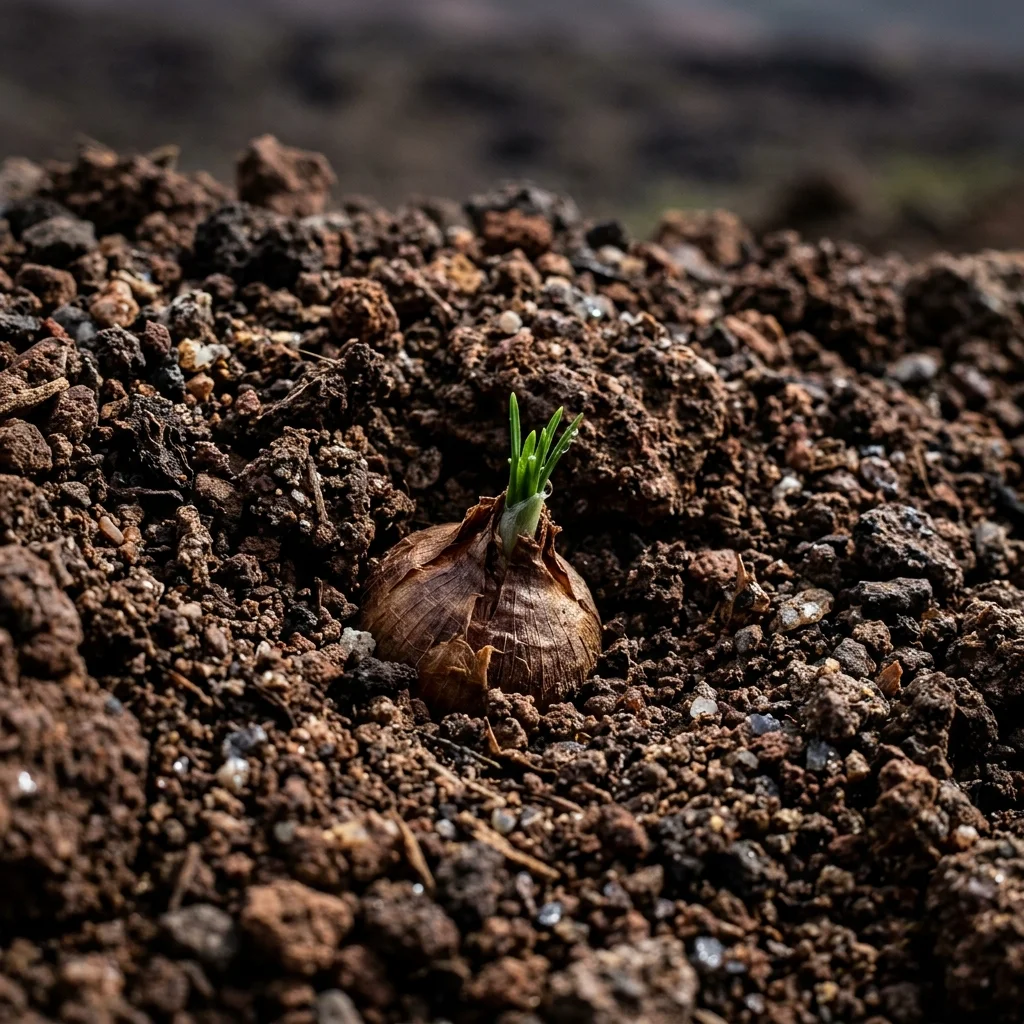
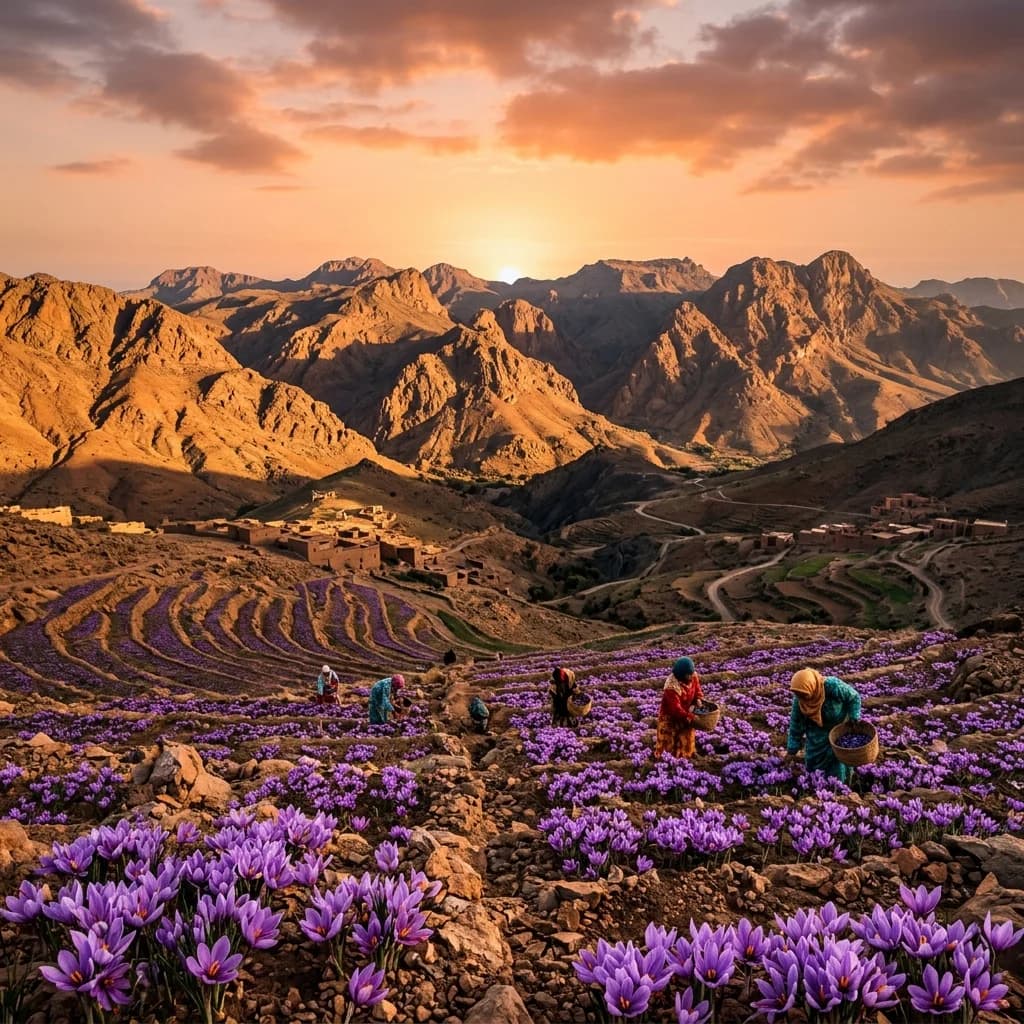
Great saffron, like great wine, is a product of its terroir. Taliouine sits at an altitude of 1,200 to 1,500 metres in the Anti-Atlas mountain range of southern Morocco. The soil here is volcanic and mineral-rich, providing the Crocus sativus bulb with an ideal balance of drainage and nutrients. Rainfall is concentrated in autumn and spring, while summers are hot and dry — precisely the cycle the saffron crocus demands.
The microclimate is equally important. Cool nights during the October–November flowering season slow the maturation of the stigmas, allowing them to develop deeper colour, stronger aroma, and higher concentrations of the three key bioactive compounds: crocin (colour), picrocrocin (flavour), and safranal (aroma). Independent laboratory tests regularly show Taliouine saffron scoring well above the ISO 3632 Category I thresholds for all three markers.
Beyond chemistry, there is tradition. The Amazigh (Berber) communities of Taliouine have cultivated saffron for centuries, passing down generation-tested techniques for bulb selection, soil preparation, hand-harvesting, and drying. This accumulated knowledge cannot be replicated in a greenhouse or a newly planted field elsewhere.
AOP Certification Explained
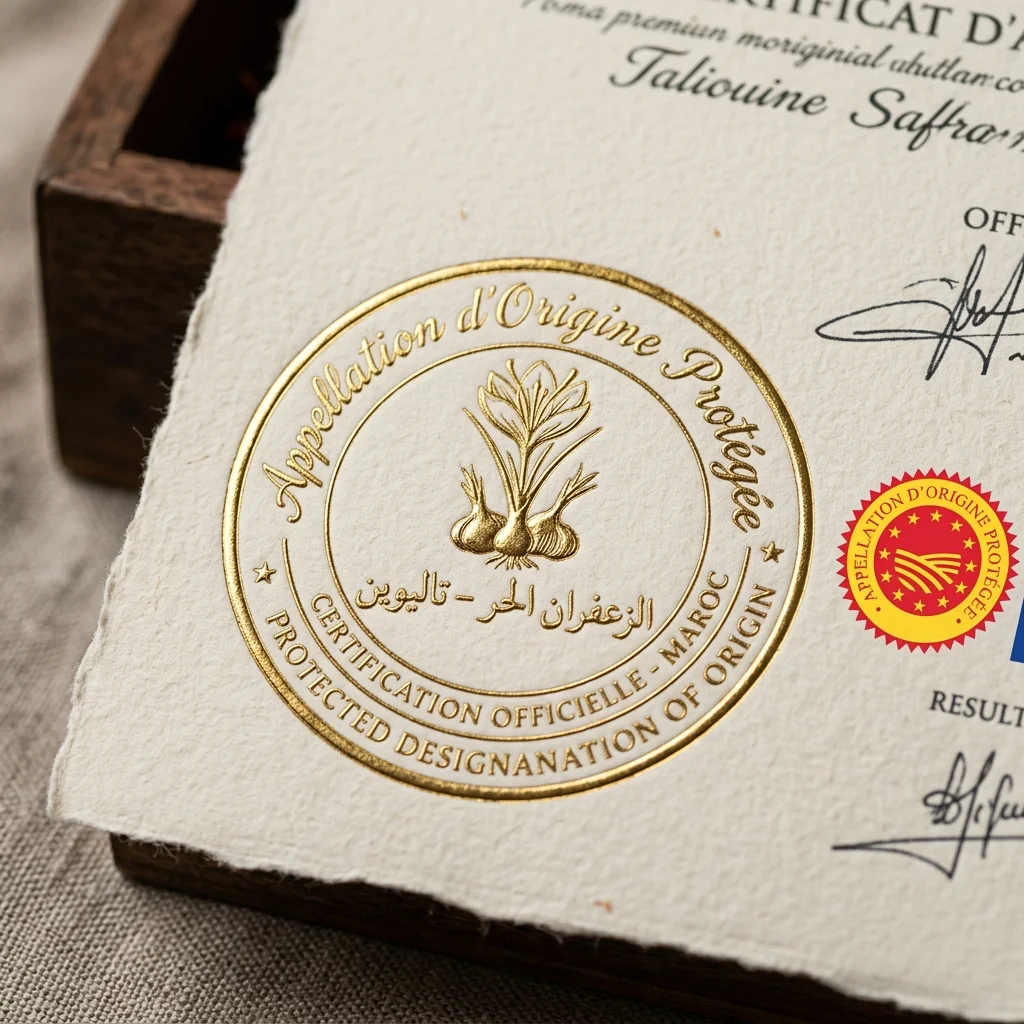
In 2010, Moroccan authorities granted Taliouine saffron Appellation d’Origine Protégée (AOP) status — the equivalent of France’s AOC or Italy’s DOP. This legally binding designation means that only saffron grown in the defined geographic zone of Taliouine and Tazenakht, harvested and processed according to traditional methods, and verified by an independent certification body may be labelled “Safran de Taliouine AOP.”
The AOP label guarantees traceability from field to final product. At Bakhchane Cooperative, every lot we produce is tracked from the specific parcels where the flowers were picked, through drying and grading, to the sealed package that reaches your kitchen or your restaurant. The certification is renewed annually after on-site audits and laboratory analysis, so the standard is not a one-time award — it is a continuous commitment to excellence.
How Taliouine Saffron Compares
Iran produces roughly 90 percent of the world’s saffron by volume. Iranian saffron can be excellent, but the sheer scale of production and the fragmented supply chain make quality inconsistent. Adulteration — mixing in safflower, turmeric, or dyed corn silk — is a well-documented problem in bulk Iranian exports.
Spain was once a dominant producer but now grows very little domestically. Much of what is sold as “Spanish saffron” is actually imported from Iran or other origins and repackaged. Genuine La Mancha saffron is a fine product, though it typically measures slightly lower in crocin content compared to Taliouine.
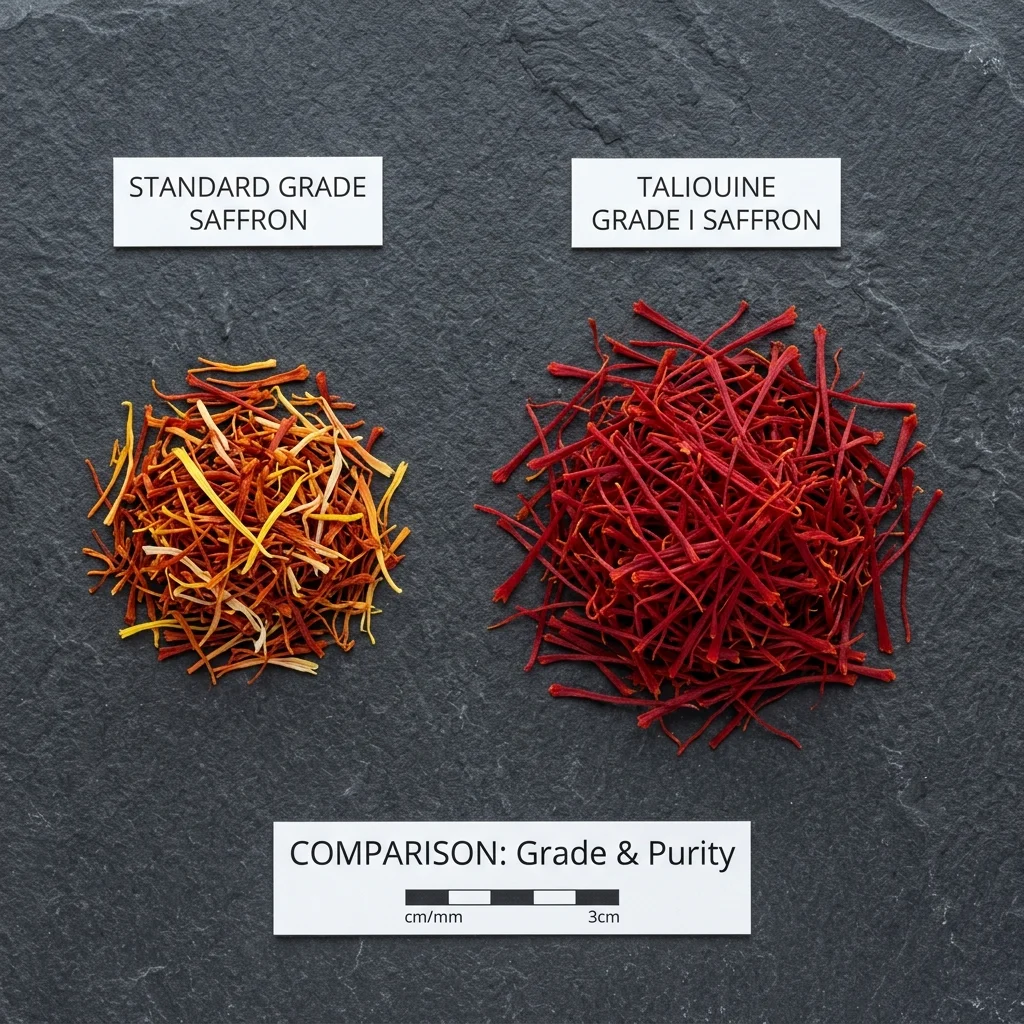
Kashmir and Greece also produce small volumes of high-quality saffron, but neither has the combination of terroir, traditional expertise, and formal AOP certification that Taliouine offers. In side-by-side laboratory comparisons, Taliouine saffron consistently achieves crocin readings above 250 (on the ISO scale where Category I requires a minimum of 190), making it among the most potent saffron on earth.
How to Source Authentic Taliouine Saffron
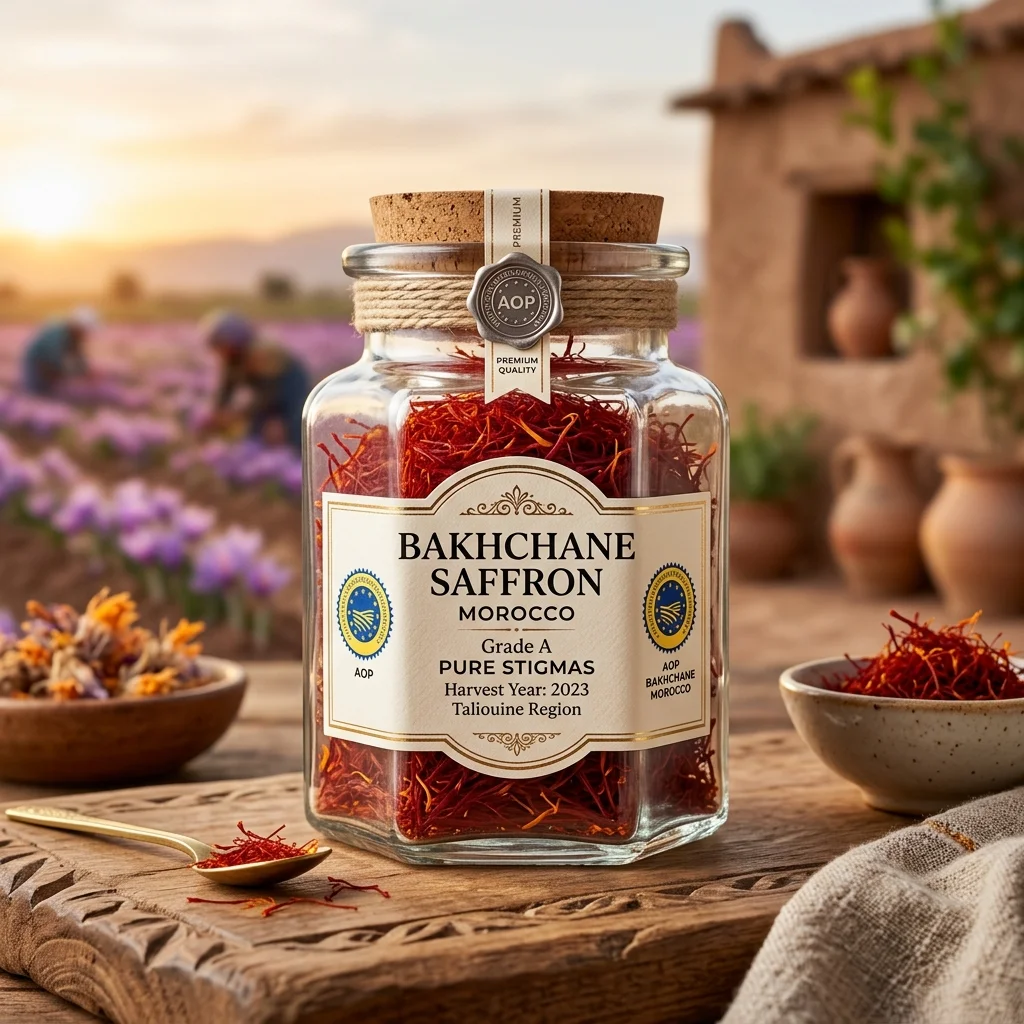
The safest way to buy genuine Taliouine saffron is to purchase directly from a certified cooperative. Bakhchane Cooperative is registered with Morocco’s ONSSA (National Office of Food Safety) and holds current AOP certification. When you order from us, you receive a product that has been hand-picked, hand-processed, and laboratory-tested — with full traceability back to the fields of Taliouine.
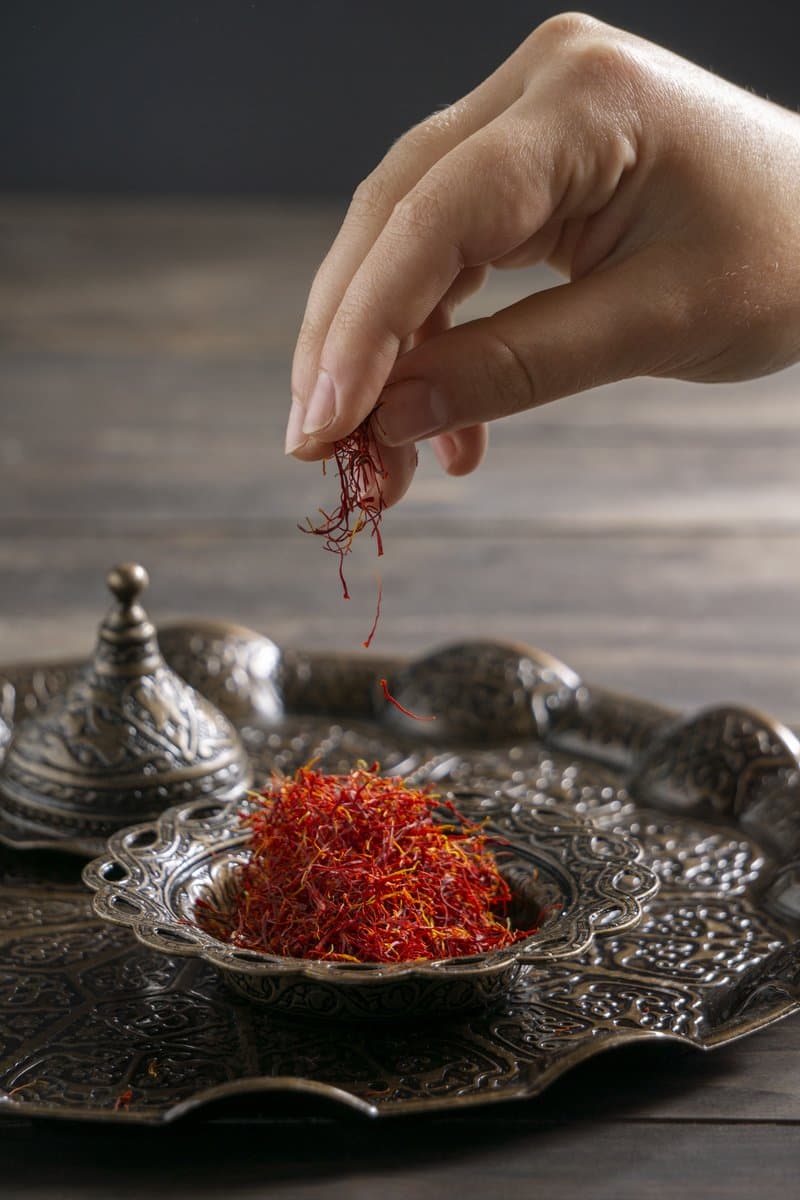
Look for these markers of authenticity: the AOP label, an ONSSA registration number, ISO 3632 grading on the packaging, and a harvest year. Be wary of saffron sold at suspiciously low prices or in powdered form (powder is far easier to adulterate than whole threads).
Ready to experience the difference? Browse our saffron collection or learn more about Bakhchane Cooperative and the families behind every thread.